An estate cleanout should never begin with a dumpster.
Before anything is donated, sold, recycled, or removed from the property, the family should first identify the documents, valuables, sentimental belongings, and personal information that must be protected.
Important items are not always stored in obvious places. Legal papers may be mixed with ordinary mail. Jewelry may be tucked into clothing or drawers. Cash may be hidden inside books, envelopes, containers, or furniture. Family photographs may be scattered throughout the home.
A careful review at the beginning can prevent accidental loss and make the rest of the cleanout more organized.
Start by Confirming Who Can Make Decisions
Before removing property, confirm who has legal authority to approve what happens to the household contents.
That person may be:
- The homeowner
- A surviving spouse
- A personal representative or executor
- A trustee
- Someone with valid power of attorney
- Another person authorized through the estate process
Family members may have strong opinions about belongings without having legal authority to sell or dispose of them.
When ownership or decision-making rights are unclear, pause before removing items and consult an estate attorney.
Great Lakes Estate Co. does not provide legal advice, but we can coordinate our work with the authorized representative and the family’s legal professionals.
Create a Protected Review Area
Before sorting the entire home, designate one secure area for anything requiring closer review.
This could be:
- A locked room
- A filing cabinet
- A clearly marked table
- A set of sealed storage bins
- A secure off-site location
Label it something unmistakable, such as:
Do Not Remove — Family Review
Anyone helping with the cleanout should understand that nothing leaves this area without approval.
This prevents important belongings from being mixed into donation or disposal piles.
Keep Legal and Estate Documents
Search carefully for documents that may be needed by the estate representative, attorney, financial institutions, insurance companies, or government agencies.
Important records may include:
- Wills and codicils
- Trust documents
- Powers of attorney
- Property deeds
- Vehicle titles
- Business ownership records
- Prenuptial or marital agreements
- Court documents
- Probate paperwork
- Funeral or burial instructions
- Safe-deposit-box information
- Military discharge papers
- Adoption records
- Birth certificates
- Marriage certificates
- Divorce records
- Death certificates
- Social Security documents
- Immigration or citizenship records
Do not discard original documents simply because copies may exist elsewhere.
Place anything that appears legal, official, notarized, sealed, or signed into the protected review area.
Keep Financial Records
Financial information may be scattered across desks, file cabinets, closets, kitchen drawers, boxes, purses, and home offices.
Look for:
- Bank statements
- Investment and retirement statements
- Pension information
- Life-insurance policies
- Annuity documents
- Mortgage records
- Loan agreements
- Credit-card statements
- Tax returns
- Property-tax records
- Pay stubs
- Employment benefit information
- Checks and checkbooks
- Savings bonds
- Stock certificates
- Business records
- Receipts for major purchases
- Records of debts owed to or by the estate
Older financial records may help identify accounts, institutions, ownership interests, or recurring obligations.
Do not assume an account is closed simply because a statement is old.
A qualified attorney, accountant, or financial professional can advise which records must be retained and for how long.
Look for Cash, Coins, and Negotiable Items
Cash and financially valuable items are sometimes stored in unexpected places.
Carefully check:
- Envelopes
- Books
- Bibles
- Desk drawers
- Filing cabinets
- Purses and wallets
- Coat pockets
- Shoes
- Kitchen containers
- Freezers
- Mattresses
- Furniture cushions
- Toolboxes
- Jewelry boxes
- Lockboxes
- Safes
- Old greeting cards
- Photo albums
Also look for:
- Foreign currency
- Collectible coins
- Silver certificates
- Savings bonds
- Gift cards
- Uncashed checks
- Money orders
- Casino chips
- Precious-metal coins
Avoid emptying containers directly into trash or donation boxes before checking their contents.
Preserve Identification and Personal Information
Some records may not need to be kept permanently, but they should not be casually discarded.
Protect documents containing:
- Social Security numbers
- Account numbers
- Medical information
- Passwords
- Tax identification numbers
- Driver’s-license information
- Insurance identification
- Signatures
- Security questions
- Credit information
Sensitive documents that are no longer needed should be securely shredded rather than placed in ordinary trash or recycling.
Also look for:
- Passports
- Driver’s licenses
- Military identification
- Professional licenses
- Membership cards
- Employee badges
- Concealed-carry permits
- Voter records
The estate representative or appropriate professional should determine what must be retained, surrendered, canceled, or destroyed.
Save Digital-Access Information
Modern estate administration often depends on access to digital accounts.
Search for records related to:
- Email accounts
- Mobile phones
- Computers and tablets
- Cloud storage
- Online banking
- Investment platforms
- Social media
- Subscription services
- Utility accounts
- Digital photographs
- Password managers
- Cryptocurrency
- Online businesses
- Domain names
- Website accounts
Passwords may be stored in notebooks, spreadsheets, envelopes, desk drawers, browser records, or password-management applications.
Do not reset, erase, donate, or recycle electronic devices until the authorized representative determines whether they contain important records or photographs.
Legal authority may be required before accessing another person’s digital accounts.
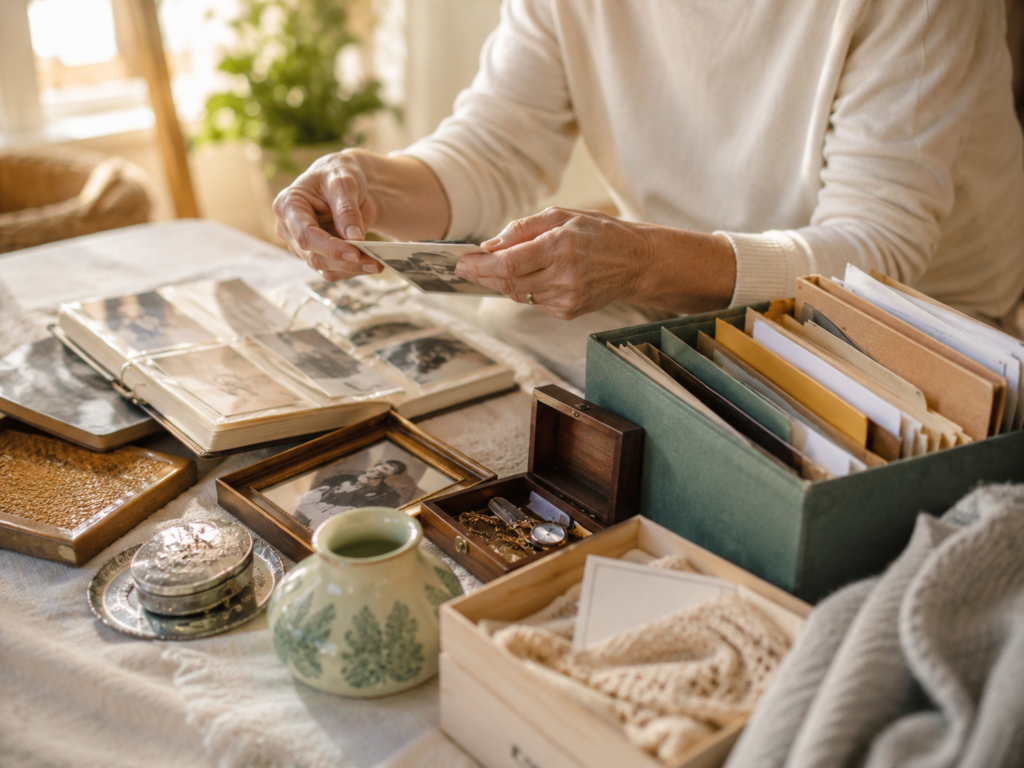
Protect Family Photographs and Personal History
Photographs are among the most commonly regretted losses during a rushed cleanout.
Look for:
- Loose photographs
- Framed photographs
- Albums
- Slides
- Negatives
- Home movies
- VHS tapes
- Film reels
- Digital cameras
- Memory cards
- External hard drives
- Old phones
- Family-history books
- Scrapbooks
Also preserve:
- Letters
- Diaries
- Journals
- Recipe books
- Bibles with handwritten family information
- School records
- Children’s artwork
- Genealogy materials
- Obituaries
- Newspaper clippings
- Wedding records
- Military correspondence
Even damaged or unidentified photographs may matter to another family member.
Create a separate family-history category rather than forcing immediate decisions.
Identify Sentimental Keepsakes
Sentimental value is personal and cannot always be determined by appearance.
Items worth setting aside may include:
- Wedding rings
- Family jewelry
- Handmade quilts
- Holiday decorations
- Religious items
- Military medals
- Uniforms
- Baby items
- Toys
- Heirloom furniture
- Family dishes
- Handwritten recipes
- Tools used by a parent or grandparent
- Awards and certificates
- Souvenirs
- Musical instruments
- Artwork created by a family member
Before donating sentimental items, consider sending photographs to family members who cannot be present.
A shared digital album can help relatives review items without traveling to the property.
Set Aside Potentially Valuable Items
Not every old item is valuable, but some belongings deserve closer review before being discarded or donated.
Possible categories include:
- Fine jewelry
- Watches
- Precious metals
- Coins
- Artwork
- Antiques
- Vintage furniture
- Designer clothing and accessories
- Collectible toys
- Sports memorabilia
- Firearms
- Musical instruments
- Rare books
- Pottery and glassware
- Sterling silver
- Vintage electronics
- Tools and equipment
- Vehicles
- Collections with a specialized market
Avoid assigning value based only on age, appearance, or an online asking price.
A practical review may involve an auctioneer, appraiser, jeweler, dealer, or category specialist.
Great Lakes Estate Co. can help identify items that may warrant additional research or professional referral, but we do not provide formal appraisals.
Review Furniture and Storage Carefully
Important belongings are often hidden inside furniture.
Before removal, check:
- Dresser drawers
- Nightstands
- Desks
- Filing cabinets
- China cabinets
- Trunks
- Ottomans
- Sofa cushions
- Recliners
- Beds
- Cabinets
- Tool chests
- Storage benches
- Sewing tables
Open envelopes, folders, books, boxes, tins, and containers before disposing of them.
If furniture is being donated or hauled away, complete a final drawer-and-compartment check first.
Handle Medications and Hazardous Items Separately
Some items should not go into ordinary donation or disposal piles.
Separate:
- Prescription medications
- Needles and medical sharps
- Cleaning chemicals
- Paint
- Pesticides
- Fuel
- Propane cylinders
- Ammunition
- Fireworks
- Batteries
- Fluorescent bulbs
- Electronics
- Medical equipment
- Compressed-gas containers
Local rules may require special disposal methods.
Do not allow unknown chemicals, medications, or hazardous materials to be packed with ordinary household goods.
Do Not Donate Everything Immediately
Donation can be an excellent option, but it should come after the family has completed a meaningful review.
Before donating, confirm:
- Family members have had an opportunity to identify wanted items
- Important documents have been removed
- Saleable belongings have been evaluated
- Electronics have been checked for data
- Furniture has been inspected
- Containers have been emptied
- Donation organizations accept the items
- The estate representative has approved the donation
Documenting donated items may also be important for the estate’s records or tax professional.
Use a Simple Sorting System
A clear category system reduces mistakes.
Consider using:
Keep
Items approved to remain with the family or homeowner.
Family Review
Items requiring input from one or more relatives.
Documents
Legal, financial, personal, and historical papers.
Potential Sale
Items that may have resale value.
Specialist Review
Jewelry, artwork, coins, antiques, or other items requiring expertise.
Donate
Approved usable items.
Recycle
Materials accepted by local recycling programs.
Dispose
Damaged or unusable items approved for removal.
Use colored labels or tape so the categories can be identified quickly.
Photograph Items Before Distribution
When several family members are involved, photographs can help document decisions.
Consider photographing:
- Valuable items
- Family heirlooms
- Items distributed to relatives
- Donation loads
- Rooms before and after the cleanout
- Items sent to auction or consignment
- Unusual items requiring approval
Documentation can reduce confusion and provide a useful record for out-of-state family members.
Common Mistakes to Avoid
Try to avoid:
- Renting a dumpster before reviewing the home
- Allowing removal crews to begin without clear labels
- Donating unopened boxes
- Throwing away old paperwork without review
- Giving away furniture without checking drawers
- Resetting or discarding electronic devices prematurely
- Assuming another family member already removed the valuables
- Letting multiple relatives take items without documentation
- Relying entirely on memory
- Waiting until the final cleanout day to make important decisions
The fastest cleanout is not always the best cleanout.
A careful first phase usually prevents delays, disputes, and regret later.
When Is the Home Ready for Cleanout?
The property is generally ready for coordinated removal after:
- The authorized decision-maker has been confirmed
- Important documents have been protected
- Family keepsakes have been identified
- Potential valuables have been reviewed
- Electronics and digital information have been addressed
- Family distributions are complete or documented
- Sale items have been separated
- Donation and disposal categories are approved
- Hazardous items have been identified
- The cleanout scope is clearly defined
At that point, the remaining contents can be removed more efficiently and responsibly.
Great Lakes Estate Co. Can Help
Estate cleanouts involve more than hauling items away.
Great Lakes Estate Co. can help coordinate:
- Estate organization and sorting
- Family-review categories
- Personal-property review
- Inventory documentation based on project scope
- Sale and liquidation coordination
- Marketplace listings
- Donation coordination
- Recycling and disposal
- Full or partial estate cleanouts
- Local project support for out-of-state families
- Property preparation after the contents are removed
Our goal is to protect what matters before anything leaves the property.
Start With a Free Consultation
You do not need to have every item sorted before contacting us.
During a free consultation, we will learn about the property, household contents, family needs, and timeline. We can then help identify the most appropriate next step and determine which services may be helpful.